Used Car Inspection Checklist: What to Look at Before You Buy
Twenty minutes with this list can save you from a very expensive surprise. Work from the outside in, and write down anything you want the dealer to explain.
The outside
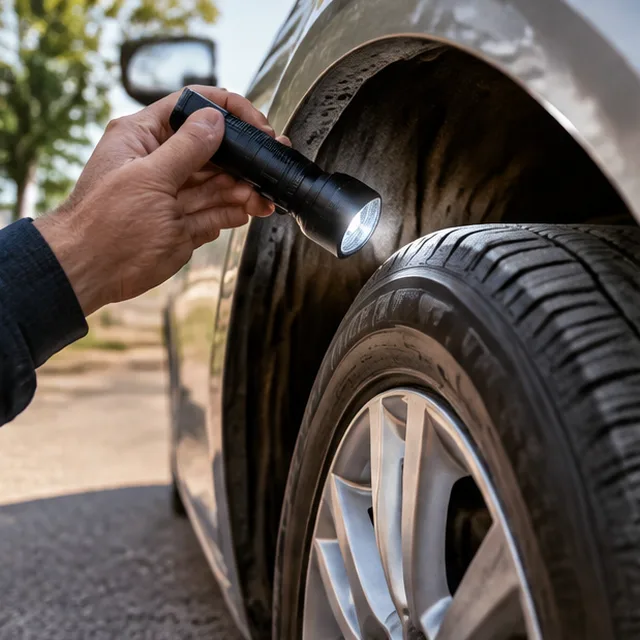
Walk around the car in daylight. Look along each side for ripples that suggest bodywork, and compare the gaps between panels. Check that all four tires match and wear evenly, and look at the date code on the sidewall.
Open the hood and trunk and look for rust, fresh sealant or mismatched paint. Check the glass for chips and cracks.
- Even tire wear, no cords or bulges
- Panel gaps that look the same on both sides
- No fresh overspray on rubber trim
- All lights, signals and wipers work
The inside
Sit in the driver's seat and test every switch: windows, locks, mirrors, seats, air conditioning, heat, radio and any screens. Smell for damp or smoke, and lift the floor mats to look for water stains.
Check that the seatbelts retract and that no warning lights stay on after the engine starts.
Under the hood and underneath
With the engine cool, look at the oil and coolant. Dark, gritty oil or a milky look is a warning sign. Look for leaks under the car and for belts that are cracked or frayed.
If you can, have an independent mechanic put the car on a lift. The cost is small compared with the cost of a repair you did not see coming.
Paperwork and numbers
Match the vehicle identification number on the car with the number on the title and the history report. Ask whether the title is clear, and ask to see service records if there are any.
Quick answers
Can I take the car to my own mechanic?
You can always ask. A dealer who is confident in a car will usually let you arrange an independent look, and the answer tells you something either way.
What is the biggest red flag?
A dealer who will not let you look closely, will not share the history report or pushes you to decide on the spot. Take your time and walk away if something feels off.
More guides
How much car can I afford
Start from the monthly payment you are comfortable with and work back to a price. The same few numbers decide the answer for everyone.
Car financing with bad credit
Having a rough credit history does not mean you cannot buy a car, but it does mean planning. Here is how to prepare and what to ask.
Trading in your car
A little preparation makes a trade-in smoother. Here is how to know what your car is worth and how to use that number.
Ready to put this into practice?
Browse the cars, or tell us what you are looking for and we will point the way.